- +91-78369 60974
- Navjeevan Circle, Surat

Blog Details Title
- By surat_dts
- 0 Comments
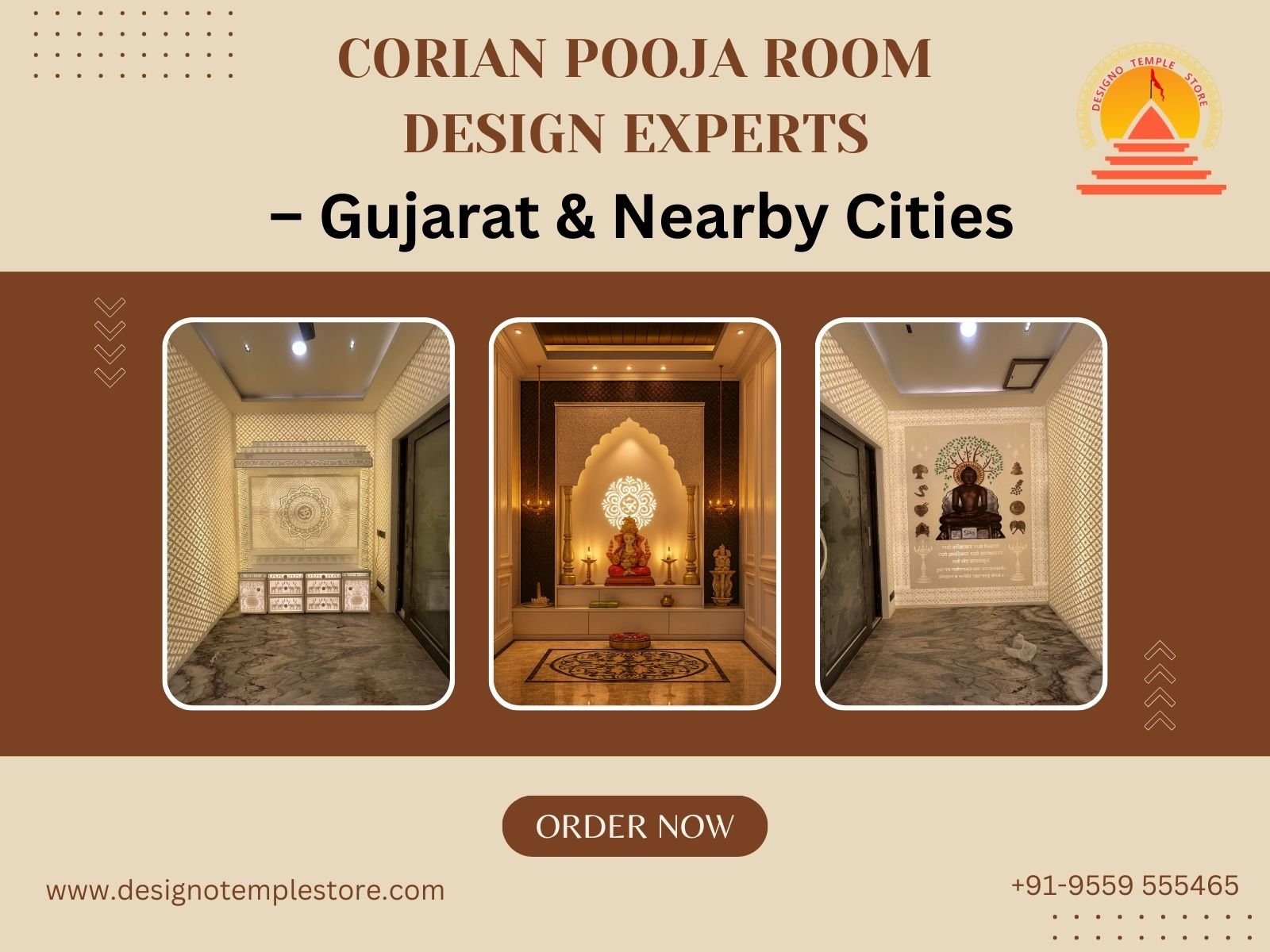
Corian Pooja Room Design Experts – Gujarat & Nearby Cities
In the rapidly evolving world of interior design, sacred spaces within homes — like pooja rooms — have transcended the traditional notion of utility. Today, they reflect personal beliefs, artistic expression, and modern aesthetics. Among the most sought-after materials for creating these sacred sanctuaries is Corian, an engineered surface that offers breathtaking beauty, durability, and design flexibility.
This article explores why homeowners in Gujarat and nearby cities are turning to Corian pooja room design experts, what defines a premium Corian design, trending concepts, research insights, and practical guidance on choosing the right experts for your space.
Why Corian is Perfect for Pooja Room Design ?
Corian, a solid surface material developed by DuPont, has gained global acclaim in interiors for good reason. Its blend of aesthetics and performance makes it uniquely suited for pooja rooms.
1. Elegant Finish with Seamless Joints
Corian surfaces can be joined seamlessly, creating smooth and continuous planes — perfect for minimalist or contemporary mandirs. The absence of visible joints enhances divine calm and purity in the space.
2. Durable & Safe for Sacred Spaces
Unlike traditional wood or marble that may warp, crack, or stain over time, Corian is highly resistant to moisture, heat, and wear. This longevity is ideal for pooja rooms where incense, camphor, and oil lamps are regularly used.
3. Wide Color & Texture Palette
Corian comes in hundreds of colors and finishes — from serene whites and creams to rich earthy tones. It easily complements temple sanctity as well as modern home interiors.
4. Easy to Clean & Maintain
Sacred spaces require regular cleaning. Corian’s non-porous surface prevents dust and liquids from penetrating, making cleaning simple and hygienic.
5. Customizable with Carvings & Backlighting
Experts can integrate LED backlighting, laser-engraved motifs, geometric patterns, and niches that highlight idols, scriptures, and sacred symbols.
The Emerging Trend of Corian Pooja Rooms in Gujarat
Gujarat, with its rich cultural heritage and deep spiritual traditions, has embraced Corian pooja room design with enthusiasm. Cities like Ahmedabad, Surat, Vadodara, Rajkot, and Gandhinagar are witnessing a surge in demand for tailored Corian mandirs that marry devotion with modern design sensibilities.
Research Insight
According to design industry trends in India, there’s a consistent shift toward materials that balance beauty, durability, and sustainability — and Corian ranks at the forefront for interior sacred spaces. In Gujarat, where home designs increasingly reflect a blend of tradition and contemporary style, Corian is emerging as the preferred choice for pooja rooms.
How Corian Design Experts Transform Your Vision
The role of design experts goes beyond creating attractive spaces — they craft experiences. A Corian pooja room designer brings:
1. Personalized Concept Development
Experts take time to understand your beliefs, space dimensions, architectural style, and lifestyle. This research phase ensures the design reflects your spiritual identity.
2. 3D Concept Visualizations
Designers typically share realistic 3D models before fabrication, so you can visualize how your pooja room will look in your actual space.
3. Material & Color Guidance
Choosing Corian tones that resonate with the emotional atmosphere of sacred spaces requires aesthetic sensitivity — an expert’s forte.
4. Precision Fabrication & Installation
Corian must be cut, shaped, and assembled with exacting precision. Certified fabricators with temple design experience ensure flawless execution.
5. Integration of Lighting & Accents
Lighting plays a crucial role in enhancing the spiritual ambiance. Experts incorporate LED strips, spotlighting, and silhouette lighting behind idols or sacred symbols.
Top Corian Mandir Design Styles in Gujarat
Here are popular pooja room styles trending in Gujarat homes:
1. Minimalist Modern
Clean lines, neutral Corian palettes, accent lighting, and hidden storage.
Perfect for contemporary apartments or urban homes.
2. Traditional Regal
Intricate Corian carvings inspired by temple architecture, rich colors, and customized pedestals.
Ideal for spacious homes that honor classic craftsmanship.
3. Fusion Contemporary
Blends traditional arches and motifs with sleek surfaces and LED accents.
Appeals to those who love tradition with modern flair.
4. Floating Wall-Mounted Mandir
Corian shelf with integrated lighting and minimalist backdrop.
Best for compact spaces or semi-open pooja corners.
5. Multi-Faith Sacred Space
Designs accommodating symbols from multiple traditions, with neutral Corian finishes.
Perfect for families embracing diverse spiritual paths.
Benefits of Hiring Local Gujarat Corian Experts
While anyone can buy Corian panels, local experts in Gujarat bring specific advantages:
1. Cultural Sensitivity
They understand local traditions, festivals, rituals and tailor designs accordingly.
2. Proximity for Site Visits
Accurate measurements and on-site customization prevent common errors that remote designers might overlook.
3. Faster Response & After-Care
Design iterations and after-installation tweaks happen faster due to geographical proximity.
4. Cost Savings
Local workshops reduce logistics charges, installation delays, and customization costs.
The Corian Design Process: Step-by-Step
Here’s how reputable Corian design experts typically work:
1. Initial Consultation
Understanding your requirements, space size, budget, spiritual practices, and preferred style.
2. Measurement & Site Assessment
Precise measurements, lighting assessment, and electrical planning for lighting features.
3. Concept Development & 3D Visualization
Sketches and renders of the pooja room from multiple angles for approval.
4. Material Selection
Choosing Corian colors, finishes, and complementary materials like glass, metal, LEDs.
5. Fabrication
Expert cutting, shaping, and joining of Corian panels with CNC precision.
6. Installation
Secure mounting, wiring for lights, and final finishing in sync with design intent.
7. Final Reveal & Walkthrough
Ensuring you’re satisfied with aesthetics, functionality, and spiritual alignment.
Cost Considerations
Corian pooja rooms are an investment — not just in materials, but in craftsmanship and spirituality. Cost depends on:
Size of the pooja room
Complexity of design
Type and color of Corian selected
Lighting and accessory integration
Installation challenges
Customization level
A detailed quotational assessment by experts ensures transparency and value.
Common Mistakes to Avoid When Choosing a Corian Design
To ensure your Corian pooja room stands the test of time:
Don’t compromise on expert craftsmanship — Corian needs precision.
Avoid DIY installations — poor installation leads to cracks and misalignment.
Don’t sacrifice lighting planning — illumination defines mood.
Avoid low-grade substitutes — inferior materials mimic Corian but lack performance.
Caring for Your Corian Pooja Room
- Maintaining Corian is effortless:
- Wipe daily with a soft, damp cloth.
- For stubborn marks, use mild soaps or dedicated Corian cleaners.
- Avoid abrasive pads — they can dull the finish.
- Re-polishing every few years keeps surfaces radiant.
Case Studies: Gujarat Corian Mandir Transformations
While specific client names remain confidential, these are typical success stories:
Case 1: Ahmedabad High-Rise Residence
A compact pooja space was transformed using a floating wall Corian unit with LED halo lighting and hidden storage. The space became a calm retreat within a busy apartment.
Case 2: Surat Villa Central Shrine
A regal design with carved Corian panels, soft spotlights, and symmetrical symmetry turned a plain room into a divine centerpiece.
Case 3: Vadodara Fusion Mandir
Combining modern Corian curves with traditional Gujarati jali patterns created a unique spiritual aesthetic admired by guests.
How to Choose the Right Corian Pooja Room Expert
Selecting the best designer is crucial. Here’s what to look for:
✔ Portfolio of Corian Mandir Projects
Authentic photos and testimonials showing diverse styles.
✔ 3D Visualization Capability
Before fabrication, you must see the proposed design.
✔ Excellent Client Reviews
Feedback on quality, timelines, support, and after-care.
✔ Transparent Pricing
Detailed quotations with material, fabrication, and installation costs.
✔ Warranty & Aftercare Support
Post-installation support for minor adjustments, cleaning tips, and maintenance.
FAQs: Corian Pooja Room Design
1. What makes Corian better than marble or wood for pooja rooms?
Corian is non-porous, stain-resistant, moisture-proof, and customizable with seamless joints — offering durability and superior aesthetics compared to traditional materials.
2. Can Corian withstand heat from lamps and incense?
Yes, Corian is heat resistant and specifically designed to endure household temple use. However, using proper lamp holders and trays helps maintain shine and hygiene.
3. How long does a Corian pooja room last?
With proper installation and care, Corian mandirs can last 20+ years without fading or losing structural integrity.
4. Does Corian require special cleaning products?
No. Daily cleaning with mild soap and water is sufficient. Avoid harsh abrasives that can dull the finish.
5. Can Corian be integrated with traditional temple carvings?
Absolutely. Corian can be laser-engraved or paired with custom wooden or metal accents to preserve traditional aesthetics.
6. Is Corian environmentally friendly?
Many Corian products are recyclable, and manufacturers often follow responsible production standards.
7. How long does installation take?
A typical Corian mandir installation takes 1–3 days, depending on complexity.
Conclusion
Corian pooja room design is more than a modern trend — it’s a deliberate evolution of sacred spaces that respects spiritual tradition while embracing contemporary design and material science. In Gujarat and nearby cities, expert Corian designers are redefining how households experience devotion and beauty within their homes.
Whether you seek minimalist sanctity, traditional grandeur, or a custom fusion, consulting seasoned Corian pooja room design experts ensures that your sacred space reflects your heart, beliefs, and aesthetic aspirations.
Need help? Our team is just a message away