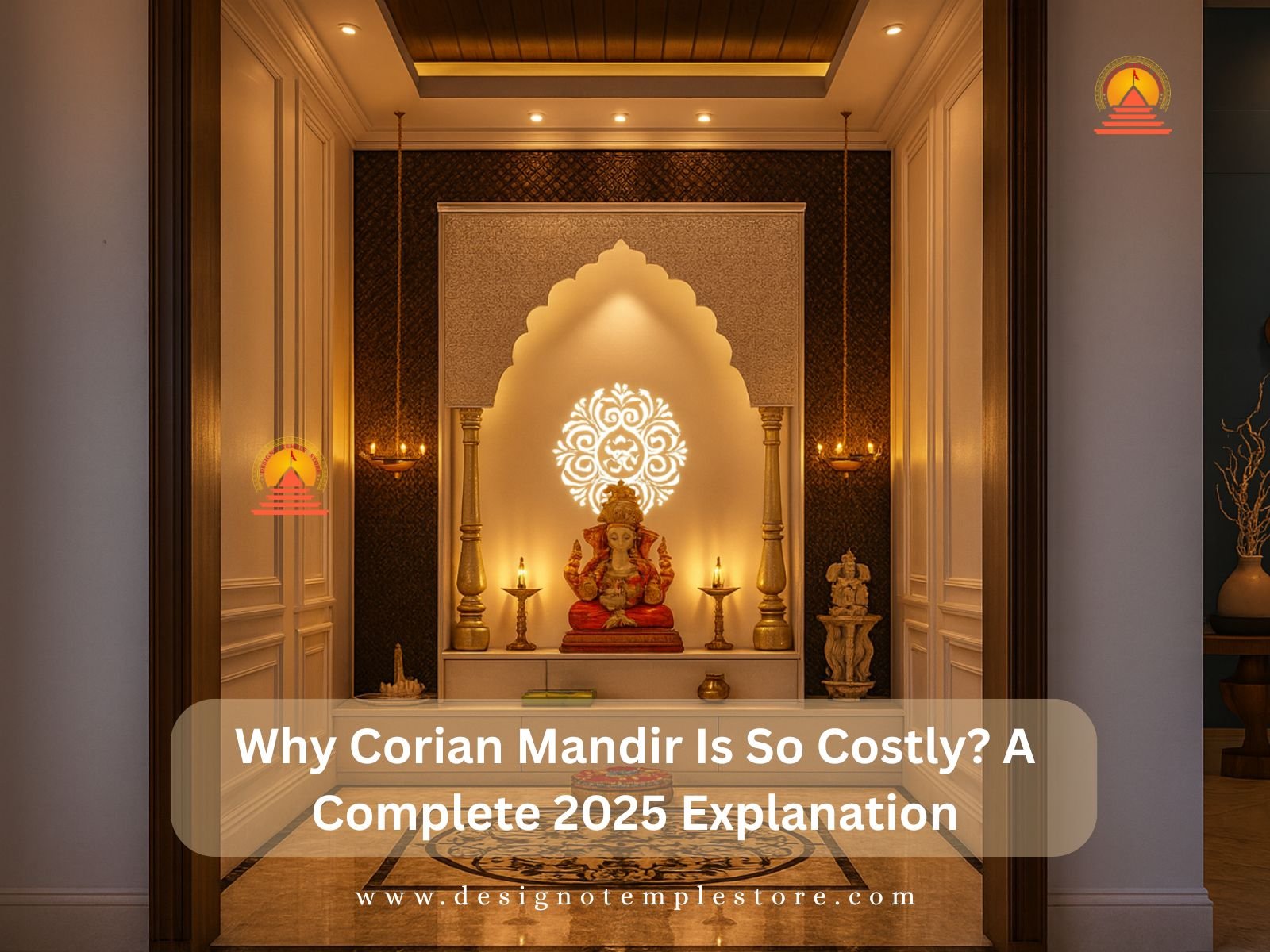
Why Corian Mandir Is So Costly? A Complete 2025 Explanation
Why Corian Mandir Is So Costly? A Complete 2025 Explanation
In recent years, Corian mandirs have become one of the most popular choices for modern homes, luxury apartments, and designer interiors. Their smooth finish, glowing elegance, seamless look, and long-lasting performance make them stand out. But one question almost every customer asks is:
“Why is Corian mandir so costly compared to wooden or simple laminate mandirs?”
The answer lies in the material, craftsmanship, machinery, customization, and the overall design process. Below is a simple, human-style explanation to help you understand exactly what you are paying for.
1. Corian Itself Is a Premium Material
Corian is not a regular plywood, MDF, or laminate. It is a solid-surface material created using acrylic polymers and natural minerals. The cost of raw Corian sheet is already high because:
It is imported or produced under strict quality guidelines.
Each sheet goes through a controlled manufacturing process.
The surface is non-porous, hygienic, and food-grade.
It does not absorb oil, haldi, kumkum, or moisture.
It is highly durable and long-lasting.
Simply put, the raw material cost of Corian is much higher than wood or laminates. And when the base material is costly, the final mandir naturally becomes premium.
2. Skilled Fabrication Is Required (Not Normal Carpentry)
A Corian mandir cannot be made by regular carpenters. It requires:
Special fabricators trained specifically for solid-surface materials
Skill in bending, joining, and polishing
Knowledge of heat application for curved designs
Invisible joint techniques
Laser cutting and CNC jali carving
Perfect finishing without gaps
This level of workmanship demands expert hands, and naturally, skilled labor increases the price.
A high-quality Corian mandir is not “assembled”; it is crafted—piece by piece. That craftsmanship is what gives the temple its seamless premium finish.
3. Expensive Machinery & Tools Are Used
Creating a Corian mandir involves advanced tools that are not found in regular furniture workshops:
Heat press and thermoforming machines
CNC routers for precise carvings
Orbital sanders and polishing machines
Laser cutting tools
Seamless bonding materials
High-quality LED integration tools
These machines are costly, and maintaining them requires investment. The use of such professional equipment adds to the final price of the mandir.
4. Invisible Joints & Seamless Finish Take More Time
One of the biggest reasons people love Corian mandirs is their:
Invisible joints
Smooth, marble-like finish
Elegant curves
Floating shelves
Achieving this requires time-consuming processes like sanding, buffing, joining, and leveling. Unlike wooden mandirs that can be made quickly, a Corian mandir takes many more hours—even days—to complete, depending on complexity.
5. Customisation Increases the Price
Corian mandirs are rarely “ready-made”. Most customers want:
Custom size
Custom back panel design
Custom jali patterns
Custom lighting
Custom drawers
Custom idol niches
Custom side arches
Custom colours or matte/gloss finishing
Every custom detail requires extra materials and extra labor. Even a small change in design can affect the entire fabrication process. This level of customization adds to the overall price.
6. Integrated Lighting Adds Premium Value
Corian works beautifully with light. That’s why many premium mandirs include:
Backlit lotus
Backlit Om or Jain symbols
Backlit jali panels
Warm LED glow plates
Border lighting
Recessed lighting channels
Good-quality lights, premium LED drivers, heat-resistant wiring, and concealed channels are expensive. Poor-quality lighting can ruin the entire temple, so good manufacturers use high-end lighting systems, which adds to the cost.
7. It Lasts for 10–15 Years (Sometimes More)
A Corian mandir is not something you replace every 2–3 years. Its benefits:
It doesn’t fade easily
It doesn’t turn yellow (with good-quality Corian)
It doesn’t absorb oil or stains
It can be repaired and polished anytime
It remains fresh-looking for many years
When a product lasts a decade or more, the initial cost is always higher. You’re investing in long-term quality, not a temporary solution.
8. Zero Maintenance = Higher Upfront Cost
Corian eliminates a lot of issues:
No termite
No peeling like laminate
No water absorption
No fungus
No oil staining
No warping
No joint cracking
No paint touch-ups
Because it saves years of maintenance costs, the initial price is slightly higher.
9. Heavy Support Structure Inside the Mandir
Even though Corian looks lightweight, a premium mandir needs:
A strong base structure
Reinforced supports
High-grade adhesives
Heat-resistant trays
Additional inner layers
Proper balancing for long-term strength
This hidden engineering adds both material and labor cost.
10. Brand Value & Expertise Matter
If you’re buying from an experienced manufacturer, you’re paying for:
Quality of material
Skilled fabricators
Good finishing
Accurate installation
Warranty or after-sales service
Secure packing for shipping
Years of design experience
Trusted brands charge more because they deliver premium craftsmanship, not shortcuts.
11. Complex Designs Cost More
Some designs require:
Multiple layers
Double-thickness panels
Deep jali carving
CNC lotus designs
Curved stands
Floating steps
Engraved mantras
Light-diffusing sheets
Hidden wiring compartments
Each additional design element increases both time and material used, increasing the cost.
12. Packing & Transportation Cost
If you are ordering outside the city or country, premium packing materials are used:
Wooden crates
Foam protection
Bubble layers
Thermocol lining
Cushioning
Insurance (for international shipping)
Safe packing is expensive, especially for fragile designs with lighting inside.
13. The Final Look Is Truly Luxury
Corian mandirs look:
Smooth
Premium
Divine
Modern
Seamless
Glowing
When placed in the house, they instantly elevate the interior. This luxury appearance naturally comes with a higher price.
Conclusion: You Pay for Quality, Skill & Long-Term Value
A Corian mandir is costly because it offers:
Premium raw material
Skilled craftsmanship
Long durability
Stunning aesthetics
Zero maintenance
High customisation
Lighting integration
Elegant finish
Modern appeal
Long-term value
Unlike regular wooden mandirs that often need repairs, polishing, or replacement, a Corian mandir stays beautiful for years—making it a worthwhile investment.